Introduction to Environmental Management Systems (EMS)
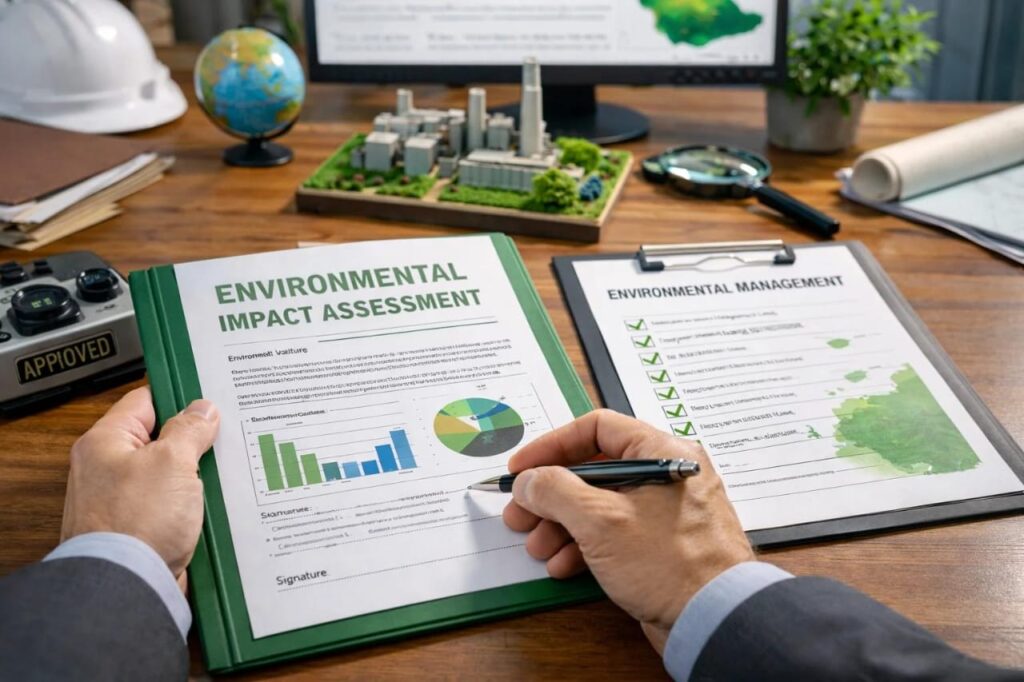
Introduction to Environmental Management Systems (EMS)
The Introduction to Environmental Management Systems course is designed to provide participants with an understanding of how organisations identify, manage, monitor and reduce the environmental impacts of their activities.
Businesses and organisations interact with the environment in many ways. Their activities may generate waste, consume natural resources, produce emissions, contribute to pollution or affect surrounding communities and ecosystems.
An Environmental Management System (EMS) provides a structured approach that enables organisations to identify these environmental issues, establish appropriate control measures and continually improve their environmental performance. This course introduces participants to the principles of environmental management systems, with particular emphasis on ISO 14001 and the European Eco-Management and Audit Scheme (EMAS).
Participants learn why organisations implement environmental management systems, how these systems operate and the key elements involved in establishing and maintaining them. It is particularly useful for professionals who are involved in quality management, health and safety, environmental protection and organisational operations.
Who should attend this course?
The course is suitable for:
- Environmental officers and assistants.
- Quality assurance and quality control professionals.
- Health and safety officers.
- Operations managers.
- Line managers and supervisors.
- Facilities and maintenance managers.
- Compliance officers.
- Business owners and organisational managers.
- Individuals interested in environmental management.
- Professionals responsible for implementing environmental policies.
What participants will learn
1. Understanding Environmental Management Systems
Participants are introduced to the concept of an Environmental Management System and its importance in modern organisations. They learn how an EMS helps businesses identify environmental responsibilities, manage environmental risks, establish objectives and monitor their environmental performance.
For example, a manufacturing company may implement an EMS to manage industrial waste, reduce water consumption, control emissions and prevent pollution. Participants also understand how environmental management can support business efficiency and demonstrate an organisation’s commitment to responsible operations.
2. Understanding ISO 14001
ISO 14001 is an internationally recognised standard that provides requirements for establishing, implementing, maintaining and continually improving an Environmental Management System. Participants are introduced to the purpose and structure of ISO 14001 and how organisations use it to manage their environmental responsibilities.
They explore important elements such as:
- Environmental policy.
- Environmental aspects and impacts.
- Legal and other compliance obligations.
- Environmental objectives and targets.
- Operational controls.
- Performance monitoring.
- Internal audits.
- Management reviews.
- Continual improvement.
For example, an organisation seeking ISO 14001 certification must establish an EMS that addresses its relevant environmental impacts and demonstrate that the system is effectively implemented.
3. Understanding Environmental Aspects and Impacts
An important part of environmental management is identifying how organisational activities interact with the environment. Participants learn the difference between environmental aspects and environmental impacts.
An environmental aspect is an element of an organisation’s activities, products or services that interacts with the environment. An environmental impact is the resulting change to the environment.
Examples include:
| Environmental aspect | Possible environmental impact |
|---|---|
| Fuel consumption | Greenhouse gas emissions |
| Industrial waste | Land pollution |
| Wastewater discharge | Water pollution |
| Excessive water consumption | Depletion of water resources |
| Industrial noise | Noise pollution |
| Chemical storage | Soil and water contamination |
Participants learn why organisations must identify significant environmental aspects and establish measures to control their associated impacts.
4. Understanding Environmental Legislation and Compliance
Organisations must understand the environmental laws, regulations and other obligations that apply to their operations.
This section introduces participants to the importance of environmental legislation and regulatory compliance.
They explore why businesses need to understand their environmental obligations, maintain appropriate records and ensure that their activities meet applicable legal requirements.
For organisations operating in Ghana, this knowledge is particularly relevant to environmental permitting, waste management, pollution control and the requirements of the Environmental Protection Authority (EPA).
5. Implementing an Environmental Management System
Participants learn about the main stages involved in establishing an EMS.
These include:
- Reviewing the organisation’s existing environmental practices.
- Identifying environmental aspects and impacts.
- Establishing an environmental policy.
- Setting measurable environmental objectives.
- Assigning responsibilities.
- Developing operational procedures.
- Providing employee training and awareness.
- Monitoring environmental performance.
They also explore how organisations can incorporate environmental responsibilities into their everyday operations.
6. Environmental Monitoring, Auditing and Performance Evaluation
An effective EMS requires organisations to regularly assess whether their environmental controls are working. Participants learn the purpose of environmental monitoring and auditing.
They explore how organisations can monitor waste generation, energy consumption, water usage, emissions and compliance with environmental procedures. They are also introduced to environmental audits as a means of identifying weaknesses, evaluating compliance and recommending improvements.
7. Continual Environmental Improvement
Environmental management is an ongoing process.
Participants learn why organisations should regularly review their environmental performance, investigate non-conformities and implement corrective actions. They are introduced to the Plan-Do-Check-Act (PDCA) approach, which provides a structured method for continual improvement.
For example, a company may identify excessive electricity consumption, introduce energy-saving measures, monitor the results and adjust its procedures based on performance.
Course benefits
Upon completion, participants should be better equipped to:
- Understand the purpose of an EMS.
- Explain the importance of ISO 14001.
- Identify environmental aspects and impacts.
- Understand basic environmental compliance requirements.
- Support the implementation of environmental policies.
- Participate in environmental inspections and audits.
- Monitor environmental performance.
- Contribute to pollution prevention and resource conservation.
- Support continual environmental improvement.
Overall course objective
The course aims to give participants a practical introduction to Environmental Management Systems and the knowledge required to understand how organisations can systematically manage their environmental responsibilities.
Course duration and assessment: These should be confirmed with the training provider because the brochure and the available provider description do not establish a single current duration or assessment format for this introductory programme. WHSO +1