IOSH Supervising Safely Training in Ghana | WHSO
Supervising Safely (IOSH)
IOSH Supervising Safely is designed for individuals who have supervisory responsibilities and are required to oversee employees, work activities and workplace operations. Supervisors play an important role in maintaining workplace safety because they are often the first point of contact between management and employees. Their decisions and actions can directly influence how safely work is carried out.
This course equips supervisors with the knowledge and practical skills needed to identify workplace hazards, implement safety procedures, monitor employee compliance and ensure that workers operate in a safe environment. It also helps participants understand how their supervisory responsibilities fit into the organization’s wider health and safety management system.
Who should attend this course?
The course is suitable for:
- Site supervisors and team leaders.
- Construction supervisors.
- Security supervisors and operations supervisors.
- Warehouse and logistics supervisors.
- Production supervisors.
- Maintenance supervisors.
- Facilities management personnel.
- Individuals responsible for monitoring employees and workplace activities.
What participants will learn
The course covers several important areas:
1. The importance of training and supervision in health and safety
Participants learn why proper supervision is essential for preventing workplace accidents and maintaining safety standards. They explore how inadequate supervision, poor communication and insufficient employee training can contribute to unsafe working conditions. They also learn how to ensure that employees understand their duties, receive appropriate instructions and follow established safety procedures.
2. Working with management and directors
Supervisors must understand how to communicate safety concerns to management and work together with senior personnel to maintain a safe workplace. This section explores the relationship between supervisors, managers and employees in implementing organizational safety policies. Participants learn how to report safety concerns, communicate operational risks and contribute to decisions that improve workplace safety.
3. Safety policies and risk assessments
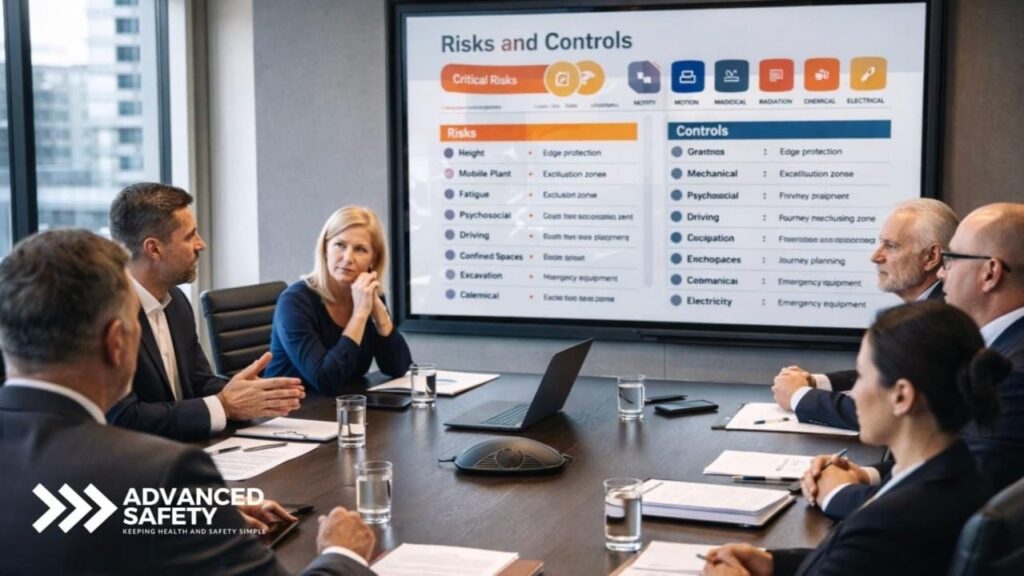
Participants develop an understanding of workplace safety policies and how risk assessments are used to identify potential dangers before accidents occur. They learn to recognize hazards, evaluate associated risks and ensure that suitable control measures are implemented.
For example, a supervisor overseeing a construction team should be able to recognize the dangers associated with working at height and ensure that appropriate protective measures are in place.
4. Workplace safety inspections
This section introduces participants to the importance of conducting regular workplace inspections. They learn how to identify unsafe conditions, inspect equipment, recognize potential hazards and report defects. Inspections help organizations discover problems before they result in injuries, equipment damage or operational disruptions.
5. Monitoring safety standards
Supervisors must ensure that employees follow established safety procedures. Participants learn how to monitor employee behavior, check the use of personal protective equipment (PPE), identify unsafe practices and take corrective action when necessary. They also explore how to encourage employees to take personal responsibility for their safety.
6. Accidents, incidents and near misses
Participants learn the importance of reporting and investigating workplace accidents, incidents and near misses. A near miss is an event that could have resulted in an injury or damage but did not. The course helps supervisors understand how to document incidents, identify possible causes and communicate findings to management to prevent similar occurrences.
7. Coordinating contractors
Many organizations employ external contractors to perform maintenance, construction, cleaning and other specialized activities. Supervisors learn how to coordinate contractor activities, communicate workplace requirements and ensure that contractors have the necessary competence to perform their duties safely.
8. Environmental awareness
Participants are introduced to environmental responsibilities associated with workplace activities. This includes understanding waste management, pollution prevention, proper handling of materials and reducing the negative environmental impact of business operations.
Course duration and assessment
A Ghanaian training provider, WHSO, lists this course as a three-day programme, including an examination. Its assessment includes a multiple-choice examination and a practical assessment. The actual schedule should be confirmed with the delivering provider. WHSO +1
Benefits of completing the course
Upon completion, participants should be better equipped to:
- Supervise employees with greater confidence.
- Identify and report workplace hazards.
- Conduct and support workplace inspections.
- Monitor compliance with safety procedures.
- Improve communication between management and employees.
- Reduce unsafe working practices.
- Contribute to accident prevention.
- Promote a positive workplace safety culture.
Overall course objective
The main objective is to develop competent supervisors who can translate organizational health and safety policies into practical actions and maintain safe working conditions during everyday operations.